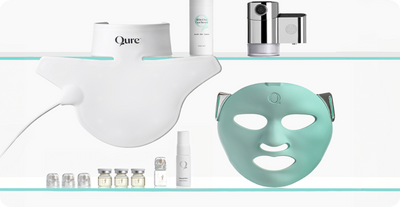

When comparing microcurrent vs red light therapy, you're not choosing between two versions of the same treatment. They work in completely different ways. One focuses on muscle stimulation and lifting, while the other supports cellular repair and overall skin quality.
With years of experience in skincare, we've found that understanding these differences is what helps people build routines that actually deliver visible, consistent results.
What this article covers:
- What Is Microcurrent?
- What Is Red Light Therapy?
- Microcurrent vs Red Light Therapy: What Is The Difference?
- Depth And Treatment Mechanism
- Can You Use Microcurrent And Red Light Therapy Together?
- Which Light Therapy Is Better For Your Skin Goals?
What Is Microcurrent?
Microcurrent uses low-level electrical currents, typically measured in microamps (µA), to stimulate facial muscles and surrounding tissue.
These currents mimic the body's natural electrical signals. As a result, microcurrent is often described as a way to “re-educate” facial muscles, helping them contract more efficiently.
In practice, this is why microcurrent is most often used for:
- Improving the appearance of facial lift and contour
- Supporting muscle tone in areas like the jawline and cheeks
- Enhancing circulation and lymphatic movement
- Creating a more sculpted look, especially with consistent use
The key point is that microcurrent works below the skin surface at the muscle level, not at the cellular repair level.

What Is Red Light Therapy?
Red light therapy uses specific wavelengths of visible light, typically in the 620 to 660 nanometer range, with some devices incorporating near-infrared light for additional depth.
Instead of stimulating muscles, red light interacts with mitochondria inside skin cells, particularly through a chromophore called cytochrome c oxidase. This interaction supports adenosine triphosphate (ATP) production, which fuels cellular repair processes.
In skincare routines, red light therapy is most often used to:
- Support collagen-related processes over time
- Improve the appearance of fine lines and wrinkles
- Help skin look calmer, more even, and more resilient
- Support recovery and reduce visible redness
- Improve overall skin tone and texture
In other words, red light focuses on how the skin functions and repairs itself, rather than how it is physically lifted.
Microcurrent vs Red Light Therapy: What Is The Difference?
The difference between microcurrent and red light therapy starts with the mechanism, but it also includes depth and how results show up over time. Here are the biggest differences between the two.
|
Category |
Microcurrent |
Red Light Therapy |
|
Typical technology type |
Low-level electrical current (microamps) |
Visible red light, typically 620 to 660 nm |
|
Approximate depth of action |
Targets the facial muscles beneath the skin |
Reaches the epidermis and dermis, supporting cellular activity |
|
Primary cellular targets |
Facial muscles and neuromuscular pathways |
Fibroblasts, mitochondria, cytochrome c oxidase |
|
Main skincare focus |
Lifting, toning, and facial contour appearance |
Skin rejuvenation, visible aging concerns, and skin quality |
|
Common use in skincare content |
More lifting-focused and treatment-specific |
Broader, more established positioning in skincare routines |
|
How it is typically used |
Often used several times per week for the maintenance of the lift |
Used consistently as part of long-term skin maintenance |
|
Current evidence base |
Strong visibility for muscle stimulation and temporary lifting effects |
Broader photobiomodulation research and skin-rejuvenation support |
|
Best way to think about it |
Surface lifting and muscle toning |
Cellular support and skin-quality improvement |

Depth And Treatment Mechanism
Microcurrent works by delivering electrical signals to the facial muscles, encouraging contraction and improved tone. The effect is mechanical and neuromuscular, which is why results tend to appear quickly but require ongoing use to maintain.
Red light therapy works through photobiomodulation, meaning it influences cellular behavior using light rather than electrical stimulation. At wavelengths around 620 to 660 nm, it reaches into the dermis and supports processes tied to collagen and repair.
Microcurrent changes how the face is positioned, while red light changes how the skin behaves.
Primary Skin Concerns Targeted
Microcurrent is most often chosen for facial lifting and muscle-toning goals. It is particularly useful when the concern is not just skin texture, but the way the face appears to sit and move over time.
Because it works through low-level electrical stimulation rather than light, its main value is in creating a more sculpted, temporarily lifted appearance rather than changing the skin itself.
Red light therapy is more often used for overall skin quality and visible rejuvenation. That includes concerns like fine lines, uneven-looking texture, dullness, and visible redness, along with general age-related changes in how the skin looks and feels.
Rather than targeting facial muscles, red light works within the skin by supporting cellular energy production and repair-related pathways.
How Each Treatment Is Commonly Used
Microcurrent is typically used as a targeted treatment for short-term visible lift, often several times per week depending on the device and the user's goals. Because the effect is temporary, it is usually treated more like ongoing maintenance than a one-time corrective treatment.
Some people use it before events or photos when they want a more defined look, while others build it into a regular routine to help maintain facial tone over time.
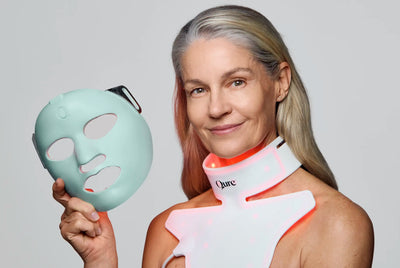
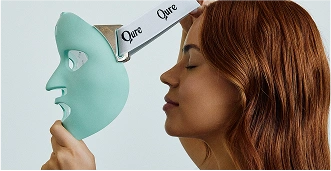
Red light therapy is more often used as a foundational part of a long-term routine, especially with tools like a red light mask or red light neck mask. It tends to fit more easily into regular at-home use because it is non-invasive and generally well-tolerated.
People also often use red light therapy as post-treatment support, such as red light therapy after chemical peel, once the skin is no longer highly reactive.

Can You Use Microcurrent And Red Light Therapy Together?
Yes, and in many cases, they work well together. Because microcurrent targets muscles and red light targets cells, they don't compete. Instead, they address different layers of the same system.
Many people use red light therapy consistently as a base, then add microcurrent when they want a more lifted, sculpted appearance. However, introduce treatments one at a time, especially if your skin is sensitive. This will help you avoid overwhelming your skin and causing irritation.
Which Light Therapy Is Better For Your Skin Goals?
Choosing the right treatment depends on what you want to prioritize and how your skin responds to different approaches.
Choose Microcurrent If…
Microcurrent may be the better fit if:
- You want to improve the appearance of facial lift and contour
- You're looking for faster, visible changes, even if temporary
- You're comfortable using a device regularly to maintain results
Choose Red Light Therapy If…
Red light therapy may be the better fit if:
- You are focused on fine lines, skin quality, breakout inflammation, and overall long-term rejuvenation
- You want your skin to look smoother and more even over time
- You prefer a gentler option with minimal downtime, especially for sensitive skin
- You want a treatment you can use consistently at home, such as a red light mask or red light neck mask

You May Want Both If…
You may benefit from both if:
- You want red light therapy as the core of your routine for gradual, lasting improvements in skin quality
- You want microcurrent as a supplemental treatment when lift and facial definition are the priority
- You prefer a routine that separates long-term skin support from short-term contour-focused results
At Qure, we generally see red light as the more sustainable everyday option because it supports visible skin improvement over time and fits naturally into a consistent routine. Our FDA-cleared Q-Rejuvalight Pro Facewear red light mask is designed with that long-term approach in mind, giving users a practical way to support anti-aging and skin-quality goals from home.
Conclusion
When comparing microcurrent and red light therapy, the better choice depends on what you want to improve. Microcurrent is best for lifting and contour-focused results. Red light therapy is better suited for improving skin tone, texture, and visible signs of aging over time.
In our experience, red light therapy works best as the foundation of a long-term routine, with supportive skincare added to help maintain skin comfort, barrier function, and visible results over time.
At Qure Skincare, that's exactly how we think about at-home treatment: start with a consistent red light mask, then support your skin with targeted add-ons like micro dart patches, a hypochlorous acid spray, and an anti-aging serum to keep your routine efficient and highly effective.
Learn more about science-backed skincare with these articles:
Most Popular Posts
-
 #Skin
#Skin
What You Eat Can Reduce Premature Aging by...
-
#Skincare
Beauty Sleep Is Real!
-
#LED Light Therapy
Hack your skincare to match your menstrual cycle
-
#Skin
Ice Bath Facial: the affordably cool hack that...
-
#Skincare
5 Ways To Prevent Premature Ageing
-
#Skincare
Glow Up for the Holidays: Radiant Skin Tips...
-
#LED Light Therapy
Shining Light On Sun-Damaged Skin
-
#LED Light Therapy
How LED Therapy Can Transform Your Skin
-
#Skin
How Cortisol Affects the Skin: The Stress-Skin Connection...
-
#Skin
The Hidden Toll of Smoking on Your Skin:...


