
If you're deciding between advanced at-home treatments, the radio frequency vs red light therapy comes up quickly. Both are widely used in dermatology-inspired routines, but they work in very different ways and deliver very different types of results.
With years of experience in skincare, we've found that confusion usually comes down to one thing: people expect them to do the same job.
They don't. One targets deeper structural support, while the other focuses on surface-level repair and skin quality. Let's break it down clearly so you can choose what actually fits your skin goals.
What this article covers:
- What Is Radio Frequency?
- What Is Red Light Therapy?
- Radio Frequency vs Red Light Therapy: What Is The Difference?
- Which Treatment Is Better For Your Skin Goals?
What Is Radio Frequency?
Radio frequency (RF) uses electromagnetic energy to generate controlled heat within the skin, typically reaching temperatures around 40–45°C (104–113°F) in the dermis.
This heat stimulates collagen remodeling and contraction, which is why RF is commonly used for skin tightening and improving laxity. It targets the deeper layers of the skin where structural support lives, rather than the surface.
In practice, RF is often chosen when the goal is firmer-looking skin, especially in areas like the jawline or cheeks.
What Is Red Light Therapy?
Red light therapy uses specific wavelengths of light, typically in the 630–660 nanometer (nm) range, to interact with skin cells without heating tissue.
These wavelengths penetrate a few millimeters into the skin and support cellular energy production, inflammation balance, and gradual improvement in visible signs of aging.
People often choose red light therapy for overall skin maintenance. It's less about tightening and more about improving how the skin looks and feels over time.

Radio Frequency vs Red Light Therapy: What Is The Difference?
The difference between radio frequency and red light therapy starts with the treatment mechanism, but it also involves tissue depth, skin response, recovery profile, and the type of concern each one is most often used to address.
In skincare, those distinctions shape both the expected results and the strength of evidence behind each treatment.
|
Category |
Radio Frequency |
Red Light Therapy |
|
Typical technology type |
Electromagnetic energy is converted into heat within the skin |
Visible red light, typically in the 620 to 700 nm range |
|
Approximate depth of action |
Primarily heats the dermis and deeper structural tissue, depending on device design |
Acts more superficially, reaching the epidermis and dermis; some near-infrared systems can reach deeper |
|
Primary tissue targets |
Collagen-rich dermal tissue and heat-responsive repair pathways |
Mitochondrial chromophores, including cytochrome c oxidase, along with fibroblast-related skin responses |
|
Main skincare focus |
Skin tightening, laxity, and firmness-related concerns |
Skin rejuvenation, visible aging concerns, and overall skin-quality support |
|
Common use in skincare content |
More tightening-focused and procedure-led |
Broader, more established positioning in at-home and maintenance skincare |
|
How it is typically used |
Usually, for firmness-focused treatment plans |
Often used as a foundational treatment in long-term rejuvenation routines |
|
Current evidence base |
Stronger association with tightening-focused outcomes |
Broader photobiomodulation literature for skin rejuvenation and cellular-response pathways |
|
Best way to think about it |
Deeper structural firming support |
Gradual skin-quality support |

Depth And Treatment Mechanism
Radio frequency uses electromagnetic energy that is converted into thermal energy in the skin. In aesthetic use, that heat is directed mainly into the dermis, where it can trigger collagen contraction and wound-healing responses.
That is why RF is more closely associated with skin tightening and visible improvement in laxity. The exact depth depends on the device type, such as monopolar, bipolar, or fractional systems.
Red light therapy works differently. It uses red wavelengths, commonly within the 620 to 700 nm range, and does not rely on heat as its main mechanism.
Instead, it works through photobiomodulation, in which light interacts with cellular chromophores, including cytochrome c oxidase, to influence cellular energy production and signaling.
This is one reason red light is more closely associated with skin rejuvenation, inflammation-related support, and gradual improvement in visible signs of aging rather than true tightening.
Primary Skin Concerns Targeted
Because RF acts through controlled dermal heating, it is more commonly discussed in relation to skin laxity, sagging, and firmness-related concerns. Its strongest aesthetic positioning is around tightening-focused outcomes.
Red light therapy is more often used for overall skin quality, including the appearance of fine lines, uneven-looking texture, acne inflammation, and visible redness.
How Each Treatment Is Commonly Used
Radio frequency is usually presented as a more targeted option for people focused on tightening and visible lifting support. It tends to appear in procedure-led conversations about laxity and more advanced signs of aging.
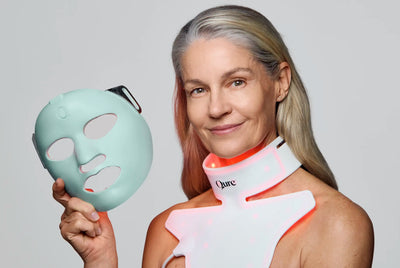
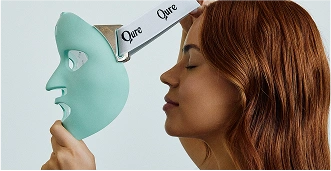
Red light therapy is more often used as a foundational modality in at-home red light masks and red light neck masks, and in-office skincare routines. It is typically used consistently over time as part of a maintenance-oriented approach to skin rejuvenation and visible anti-aging support.
Radio frequency is usually presented as a more targeted option for people focused on tightening and visible lifting support. It tends to appear in procedure-led conversations about laxity and more advanced signs of aging.
Red light therapy is more often used as a foundational modality in at-home routines, including red light masks and red light neck masks, as well as in-office skincare settings.
It's often chosen for its ease of use, minimal downtime, and ability to support gradual improvements in visible skin quality, making it a strong fit for long-term rejuvenation and maintenance routines.

Can You Use Radio Frequency And Red Light Therapy Together?
Yes, often you can, because they target different aspects of skin appearance through different mechanisms.
Radio frequency is typically used for firmness and laxity-related goals, while red light therapy is often valued for its versatility, minimal downtime, and broader role in supporting skin quality and visible rejuvenation.
Combining them can make sense when someone wants to address both visible laxity and overall skin-quality concerns.
People also often think about red light the way they think about red light therapy after chemical peel: as a gentler, more recovery-friendly option that fits more easily into a consistent routine once the skin is ready for it.
The main consideration is timing. Because radio frequency adds heat and can temporarily increase sensitivity, spacing treatments is usually the more conservative approach, especially for reactive or recently treated skin. Device instructions and clinician guidance should always come first.
Which Treatment Is Better For Your Skin Goals?
Choosing the right treatment depends on what you want to prioritize and whether your goals are more focused on firmness or overall skin quality.
Choose Radio Frequency If…
Radio frequency may be the better fit if:
- Your main concern is skin laxity or loss of firmness
- You want a treatment that is more directly associated with tightening-focused results
- You are comfortable using a heat-based modality, and your skin tolerates more intensive treatments well
Choose Red Light Therapy If…
Red light therapy may be the better fit if:
- You are focused on fine lines, visible skin quality, breakout inflammation, or overall skin rejuvenation
- You prefer a gentler option with little to no downtime, especially if your skin is sensitive or reactive
- You want something you can use consistently at home, without needing recovery time between sessions
- You are looking to support your routine alongside topical products like an anti aging serum for better overall skin appearance
- You value ease of use and consistency, using tools like a red light mask or red light neck mask as part of a long-term maintenance routine

You May Want Both If…
Using both may make sense if:
- You want to address both visible laxity and overall skin quality
- You are looking for a routine that combines deeper firming support with a gentler maintenance modality
- You want to pair targeted device use with skin-supportive products, such as a hypochlorous acid spray for a calm, balanced routine or micro dart patches for more focused concerns
Conclusion
Radio frequency is the stronger option for tightening and treating visible laxity. Red light therapy is better suited for improving skin tone, texture, inflammation, and overall appearance in a gradual, low-risk way.
If your goal is to support skin tone, texture, wrinkles, and overall skin quality over time, the Qure Skincare red light mask offers a gentle, FDA-cleared way to add red light therapy to your routine.
At Qure Skincare, we design our tools to fit into real routines, giving you a consistent, low-stress way to support visible skin improvements over time. It's a simple, informed approach to building a routine that feels sustainable and results-focused.
Learn more about science-backed skincare with these articles:
Most Popular Posts
-
 #Skin
#Skin
What You Eat Can Reduce Premature Aging by...
-
#Skincare
Beauty Sleep Is Real!
-
#LED Light Therapy
Hack your skincare to match your menstrual cycle
-
#Skin
Ice Bath Facial: the affordably cool hack that...
-
#Skincare
5 Ways To Prevent Premature Ageing
-
#Skincare
Glow Up for the Holidays: Radiant Skin Tips...
-
#LED Light Therapy
Shining Light On Sun-Damaged Skin
-
#LED Light Therapy
How LED Therapy Can Transform Your Skin
-
#Skin
How Cortisol Affects the Skin: The Stress-Skin Connection...
-
#Skin
The Hidden Toll of Smoking on Your Skin:...


