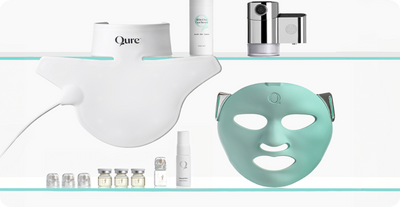

Red light therapy and high frequency are not interchangeable treatments.
Red light therapy uses visible light to support skin recovery and improve the look of inflammation and fine lines over time. High frequency uses electrical current at the skin's surface and is typically used as a targeted treatment for blemish-prone or congested areas.
When we compare red light therapy vs high frequency, the difference comes down to mechanism, treatment scope, and individual skin goals.
What this article covers:
- What Is Red Light Therapy?
- What Is High Frequency?
- Red Light Therapy vs. High Frequency: What Is The Difference?
- Can You Use Red Light Therapy And High Frequency Together?
- Which Treatment Is Better For Your Skin Goals?
What Is Red Light Therapy?
Red light therapy uses visible red wavelengths, typically in the low- to mid-600-nanometer range, to support skin function beneath the surface.
In facial skincare, the wavelengths most often discussed are around 630 nm to 660 nm because they can penetrate the epidermis and upper dermis, where they interact with skin cells involved in repair and renewal.
The process is known as photobiomodulation. Light energy is absorbed by cellular chromophores, especially within the mitochondria. These structures produce adenosine triphosphate (ATP), the energy that skin cells use to repair and maintain themselves.
When red light is delivered at the right wavelength and treatment frequency, it can help support the skin's recovery response, improve the look of visible redness, and soften the appearance of fine lines over time.
In skincare, red light is also often paired with near-infrared light, commonly around 830 nm, because near-infrared wavelengths can reach deeper than visible red light. Red light, though, remains the more skin-surface-focused category in most beauty and at-home device conversations.

What Is High Frequency?
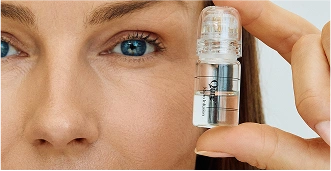
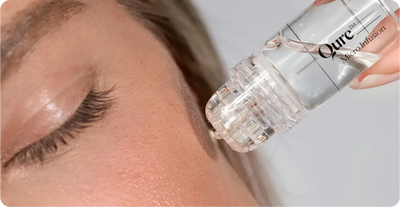
High-frequency uses electrical energy, not light (not to be mistaken for microcurrent vs red light therapy). In skincare devices, the current is typically a low-level alternating current delivered through a sealed glass electrode.
When the electrode contacts the skin, or hovers just above it, depending on the technique, it produces a mild stimulating effect and generates ozone at the surface. That ozone-producing effect is part of why high frequency has traditionally been used in facials for oily, blemish-prone, or congested skin.
It creates a localized electrical effect that may temporarily support circulation and create a more clarifying environment in breakout-prone areas. In practice, that is why high frequency is usually used for short contact sessions on specific spots rather than as a broad, full-face treatment for overall skin rejuvenation.
It's also important to separate high frequency from radio frequency vs red light therapy. Radio frequency uses electromagnetic energy to generate heat in deeper tissue, often to support skin tightening. High frequency doesn't do that. It acts much more superficially and is generally used for a different clinical purpose.
In real-world routines, high frequency is a narrower tool. It can make sense for occasional breakout support or targeted treatment on oily areas, but it is not usually the first choice for someone who wants full-face support for visible inflammation or early aging concerns.

Red Light Therapy vs. High Frequency: What Is The Difference?
Red light therapy and high frequency differ at the level of energy source, tissue interaction, treatment depth, and clinical use case.
They are not interchangeable technologies, even when both appear in cosmetic skincare routines.
Type Of Energy Used
Red light therapy uses nonthermal visible light, most commonly in the 630 nm to 660 nm range for skin-focused treatments. Some systems also include near-infrared wavelengths around 830 nm, which can reach deeper layers of tissue.
High frequency does not use light. It uses a low-level alternating electrical current delivered through a glass electrode. This current creates a localized surface effect during treatment.
How Each Treatment Works On Skin
Red light therapy works through photobiomodulation. Light energy is absorbed by cellular chromophores within the mitochondria. This supports ATP production, which skin cells rely on for repair and normal function. It also influences pathways involved in inflammation response and collagen maintenance.
High frequency works at the skin's surface. The electrical current produces mild stimulation and generates ozone at the point of contact. This creates a temporary environment that can support breakout-prone or congested skin. However, it doesn't directly influence deeper cellular repair processes in the same way.
Depth And Treatment Scope
Red light therapy penetrates beyond the surface, reaching the epidermis and upper dermis depending on wavelength. Because of that, it is used as a field treatment. It treats larger areas evenly and supports overall skin quality.
High frequency remains superficial. Its effects are limited to the outer layers of the skin. It is used as a focal treatment, applied to specific blemishes or areas of congestion rather than across the full face.

What Each One Is Best Known For
Red light therapy is most often associated with visible skin recovery. It supports a more even tone, reduces the appearance of redness, and helps improve the look of fine lines over time.
High frequency is more closely associated with short-term, targeted use. It is commonly used on individual blemishes, oily zones, or areas where congestion is present.
Treatment Experience
Red light therapy has low sensation. Most users feel little to no heat or stimulation during a session. Treatments typically last longer and cover the full treatment area, especially when using a red light mask.
High frequency produces a noticeable tingling or buzzing sensation. It is applied in short passes over specific areas and is rarely used as a full-face treatment for extended periods.
How Each Fits Into An At-Home Routine
Red light therapy works best as a consistent, structured treatment. Results build over time, so regular use is key. Devices are designed for repeatable sessions with even coverage.
High frequency is used more reactively. It is typically brought in when breakouts appear or when specific areas need short-term attention, rather than as a daily or foundational step.
Can You Use Red Light Therapy And High Frequency Together?
Yes, you can use both, but you should use them strategically, not aggressively.
High frequency is the more targeted treatment, so if you use both in the same session, it usually makes sense to use high frequency first on specific blemish-prone or congested areas.
Red light therapy can follow as the broader treatment, supporting overall skin recovery and helping calm the look of inflammation.
That said, they do not need to be used together every time. For many people, especially those with sensitive or reactive skin, it is better to alternate them on different days.
The main caution is overuse. Too much stimulation, even from useful treatments, can compromise the skin barrier. If skin is irritated, dry, or already inflamed, red light therapy is usually the better option to keep in the routine, while high frequency may need to be reduced or paused.

Which Treatment Is Better For Your Skin Goals?
The better option depends on what you want the treatment to do and how broadly you need it to work.
Choose Red Light Therapy If…
Choose red light therapy if your goal is overall skin support rather than spot treatment. It makes more sense when concerns are diffuse, not isolated, such as visible inflammation, uneven tone, post-breakout marks, or the early look of fine lines.
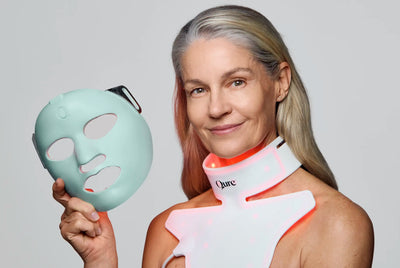
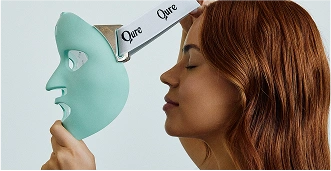
A red light mask is especially useful. A mask format allows for uniform exposure across the face, which is more practical for repeated use than treating one small area at a time.
The neck is also often left out of treatment plans, even though it shows visible aging early, so a dedicated red light neck mask can make the routine more complete.
Choose High Frequency If…
Choose high frequency if the main issue is occasional breakouts or oilier areas that need short, targeted attention. It is better suited to reactive use than to broad rejuvenation. It's usually the tool you reach for when one area needs help, not when the whole face or neck needs ongoing support.
High frequency can be useful, but it doesn't replace a full-face modality designed for cumulative results. It is more of a focused add-on than a foundation.
Conclusion
When evaluating red light therapy vs. high frequency, the biggest difference is mechanism and intent.
Red light therapy supports the skin at a cellular level, making it a strong option for long-term skin health and visible rejuvenation. High frequency offers targeted, short-term support for specific concerns like breakouts.
If you're building a routine that prioritizes consistency, skin barrier integrity, and clinically grounded results, red light therapy provides a more comprehensive approach.
At Qure, our devices are rigorously tested, dermatologist-approved, FDA-cleared, and designed with sensitive skin in mind.
That means if you're looking for the broader benefits of red light therapy you can trust, our red light mask and red light neck mask make it easier to treat the areas that need consistent, full-coverage support.
Learn more about science-backed skincare:
Most Popular Posts
-
 #Skin
#Skin
What You Eat Can Reduce Premature Aging by...
-
#Skincare
Beauty Sleep Is Real!
-
#LED Light Therapy
Hack your skincare to match your menstrual cycle
-
#Skin
Ice Bath Facial: the affordably cool hack that...
-
#Skincare
5 Ways To Prevent Premature Ageing
-
#Skincare
Glow Up for the Holidays: Radiant Skin Tips...
-
#LED Light Therapy
Shining Light On Sun-Damaged Skin
-
#LED Light Therapy
How LED Therapy Can Transform Your Skin
-
#Skin
How Cortisol Affects the Skin: The Stress-Skin Connection...
-
#Skin
The Hidden Toll of Smoking on Your Skin:...


