
If you've been asking whether red light therapy female hormones are connected, you're not alone. Hormones touch skin, sleep, mood, energy, and cycle symptoms, so it's natural to wonder whether photobiomodulation can shift endocrine function.
The most accurate answer is nuanced: red light therapy has well-described cellular effects, but there's no strong evidence that it directly changes hormone levels in healthy women.
Any benefits people notice are more plausibly explained by indirect pathways like inflammation modulation, circulation support, and sleep or stress improvements.
What this article covers:
- Can Red Light Therapy Influence Female Hormones?
- How Female Hormones Are Regulated
- What Red Light Therapy Actually Does In The Body
- Red Light Therapy And Menstrual Cycle Symptoms
- Red Light Therapy And Menopause
- Red Light Therapy And Fertility
- Can Red Light Therapy Affect Thyroid Function?
- What Red Light Therapy Does Not Do
- What Red Light Therapy Can Do For You Right Now
- Frequently Asked Questions
Can Red Light Therapy Influence Female Hormones?
There is no strong evidence that red light therapy directly alters hormone levels in healthy women.
Photobiomodulation is primarily studied for local tissue effects such as changes in cellular energy production, inflammatory signaling, and microcirculatory dynamics.
One reason circulation comes up in hormone-related conversations is that some research also explores nitric oxide–related signaling and vasodilation with photobiomodulation, which may support local blood flow and tissue oxygenation.
That is a vascular effect, not an endocrine one, meaning it may influence tissue comfort and recovery without directly altering systemic hormone levels such as estrogen or progesterone.
That said, shifting systemic hormone levels (like estrogen, progesterone, luteinizing hormone, follicle-stimulating hormone, or thyroid hormones) is a different category of claim.
Those changes require endocrine signaling through tightly regulated feedback loops. In healthy women, day-to-day variations in hormones are governed by the hypothalamic-pituitary-ovarian axis, not by external light exposure on the skin.
So where does the confusion come from? Many “hormone” conversations blur two things:
- Systemic endocrine changes: measurable shifts in circulating hormones or gland output
- Localized tissue effects: improved comfort, reduced inflammation, or better sleep that can feel hormonal without actually changing hormone levels
If red light therapy influences how you feel during PMS, perimenopause, or stressful periods, it's more plausible that the pathway is indirect (supporting recovery, reducing inflammatory load, or improving sleep quality) rather than directly “increasing estrogen” or “balancing hormones.”

How Female Hormones Are Regulated
Female hormones are regulated through a coordinated neuroendocrine network commonly described as the hypothalamic-pituitary-ovarian (HPO) axis.
Here's the simplified physiology:
- The hypothalamus releases gonadotropin-releasing hormone (GnRH) in pulses.
- The pituitary responds by releasing follicle-stimulating hormone (FSH) and luteinizing hormone (LH).
- The ovaries produce estrogen and progesterone, which feed back to the hypothalamus and pituitary to modulate the next pulses.
This feedback loop is why hormone levels shift across the menstrual cycle, and why the same person can experience different symptoms at different cycle phases.
Estrogen and progesterone are not “on/off switches.” They change in patterns tied to follicular development, ovulation, and luteal-phase dynamics.
Stress hormones like cortisol can also influence the system, primarily through how stress impacts hypothalamic signaling, sleep quality, and inflammatory tone.
This matters for red light therapy because external light exposure does not directly override endocrine signaling.
The HPO axis is designed to integrate internal cues (neurotransmitters, metabolic signals, sleep, stress, and ovarian feedback). When someone claims a device “balances hormones,” it's usually skipping past the physiology that actually governs hormone regulation.
A more credible framing is: red light therapy may support cellular and tissue-level conditions that influence comfort and recovery, which can indirectly affect how hormone-driven phases feel. But that would be done without altering hormone levels directly.
What Red Light Therapy Actually Does In The Body
Red light therapy works through photobiomodulation. At controlled wavelengths in the red and near-infrared regions, photons are absorbed by cellular chromophores, most notably mitochondrial cytochrome c oxidase.
This interaction is associated with downstream effects on cellular energy production and signaling.
The most commonly cited biological effects include:
- Mitochondrial stimulation and altered redox signaling
- Increased adenosine triphosphate (ATP) production
- Anti-inflammatory signaling effects
- Improved microcirculation and nitric oxide–related pathways in certain models and applications
These effects do not equal “hormone manipulation.”
They describe a cellular support modality (non-ablative, non-thermal when used appropriately) intended to nudge tissue physiology toward better function and recovery.

Why Cellular Energy Matters
Cellular energy matters because tissues with high metabolic demand rely on efficient mitochondrial function.
In skin, this can translate into support for collagen-related processes and barrier resilience. In musculoskeletal tissue, it can relate to recovery signaling. In theory, pelvic and reproductive tissues, like any tissue, also depend on energy metabolism and inflammatory balance.
That “in theory” clause is important. While researchers are exploring photobiomodulation in reproductive contexts, most of the stronger evidence base for consumer-facing red light devices is still centered on skin and inflammation-related outcomes, not endocrine endpoints.
This is why we separate cellular support from hormone claims. You can respect the science without turning photobiomodulation into an endocrine intervention.
Red Light Therapy And Menstrual Cycle Symptoms
There is emerging interest in whether photobiomodulation can help with menstrual discomfort, particularly dysmenorrhea. The proposed rationale is not “hormone balancing,” but rather potential anti-inflammatory and analgesic signaling effects, plus local circulation support.
Recent reviews and trials in dysmenorrhea contexts have explored light-based therapies as non-pharmacologic adjuncts, with varying parameters and quality.
The overall theme is “promising but still developing,” rather than definitive.
Two clinical guardrails matter here:
- Menstrual pain can be primary, but it can also reflect underlying pathology (endometriosis, fibroids, adenomyosis).
- Symptom improvement is not proof of hormonal change.
Red light therapy should not replace medical evaluation when symptoms are severe, worsening, or accompanied by other red flags.
It's also smart to avoid stacking new interventions all at once. When routines change rapidly, people often misattribute unrelated symptoms to a single factor, which is part of why red light therapy detox symptoms narratives spread. (Feeling “off” can be real; the detox explanation is usually not.)

Red Light Therapy And Menopause
Menopause and perimenopause bring well-known shifts: estrogen fluctuations, collagen decline, changes in skin texture, dryness, and altered sleep or mood patterns.
The temptation is to look for a tool that “restores” hormones.
Red light therapy is not proven to boost estrogen, increase progesterone, or reverse menopausal endocrine changes. What it may do, depending on the individual and the device, is support skin quality and comfort through cellular pathways tied to collagen maintenance and inflammation signaling.
Indirect benefits are the more biologically plausible story:
- If a routine supports relaxation and improves sleep quality, that can influence perceived stress load.
- If inflammation is better controlled in the tissue, discomfort may feel reduced.
- If skin collagen-related processes are supported, visible signs of aging may feel more manageable.
Those are meaningful outcomes, but they are not hormone replacement, and they should not be framed as endocrine therapy.
Red Light Therapy And Fertility
There are animal and early-stage studies exploring photobiomodulation in ovarian or reproductive contexts, including work on ovarian aging models and mitochondrial function. These findings are interesting, but they do not automatically translate to improved fertility outcomes in humans.
There is also emerging academic exploration in human reproductive medicine settings, such as investigations of near-infrared photobiomodulation and oocyte-related outcomes in highly controlled environments.
These are not equivalent to at-home cosmetic mask use, and they should not be interpreted as DIY fertility treatment.
A small number of clinical reports and case series discuss PBM protocols in fertility-related contexts, but these are not definitive, and they do not establish photobiomodulation as a fertility treatment.
If fertility is the goal, please remember:
- Photobiomodulation may be explored as a supportive modality in some supervised settings
- It is not a replacement for fertility evaluation or evidence-based treatment
- Medical supervision is essential

Can Red Light Therapy Affect Thyroid Function?
There is research on low-level laser therapy (LLLT) applied directly over the thyroid gland in clinical contexts such as chronic autoimmune thyroiditis-related hypothyroidism.
However, this is not the same as using a cosmetic red light mask for facial skin. The target tissue, dosing parameters, and clinical intent differ.
- Do not self-treat thyroid disease with at-home devices.
- Do not assume “red light therapy” is one uniform intervention; wavelength, power density, and clinical targeting matter.
- If you have thyroid disease, work with an endocrinologist before applying any device over the neck.
If you're using a neck device for cosmetic skin support, follow the device's intended use and guidance, and avoid conflating cosmetic protocols with thyroid-directed clinical research.
What Red Light Therapy Does Not Do
Let's bust some myths about red light therapy:
- It does not “balance hormones” overnight
- It does not replace hormone therapy
- It does not directly increase estrogen or progesterone levels in healthy women
- It should not be marketed with detox-style or biohacking promises
If you see content claiming red light “fixes hormones,” ask what outcome was measured. Symptom improvement is not the same as a documented endocrine shift. And feeling calmer is not proof that estrogen rose.
It's also worth separating post-procedure recovery from hormone narratives. For example, red light therapy after Botox is usually discussed in terms of comfort, inflammation modulation, not endocrine change. Keeping those lanes separate keeps the science clean.

What Red Light Therapy Can Do For You Right Now
Red light therapy is not a hormone replacement strategy. What it can do, when used consistently and appropriately, is support the biological systems that influence how your skin feels and functions every day.
Through controlled wavelength photobiomodulation, red light therapy supports mitochondrial activity, cellular energy production, and anti-inflammatory signaling.
Over time, this can translate into:
- Improved appearance of fine lines and wrinkles
- Enhanced skin texture and tone
- Visible reduction in redness associated with mild inflammation
- Support for skin resilience during hormonally driven transitions like perimenopause
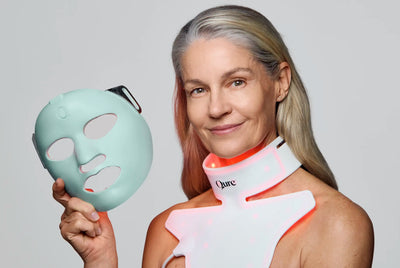
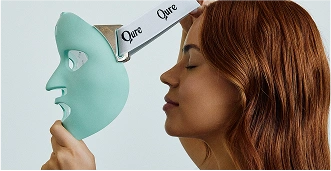
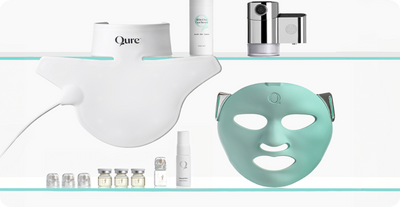
At Qure, we design our devices around this science-first framework. Our FDA-cleared red light mask is cleared for cosmetic indications such as improving the appearance of fine lines, wrinkles, and mild-to-moderate acne.
For areas often affected by collagen decline during perimenopause and menopause, our FDA-cleared red light neck mask extends the same controlled, precision-calibrated technology to the neck and décolletage, where skin changes can be especially noticeable.
If you want to build a more comprehensive, non-invasive routine, pairing LED sessions with our anti aging serum can support hydration and collagen-focused care.
The takeaway is simple: red light therapy does not “rebalance” hormones, but it can help you care for your skin with precision and clinical integrity.
Frequently Asked Questions
Can Red Light Therapy Regulate My Period?
There is limited evidence that photobiomodulation regulates menstrual cycles through direct endocrine pathways. Some research explores light-based therapies for menstrual pain, which is a symptom-level target rather than cycle regulation. If your periods are irregular, heavy, or changing rapidly, speak with a clinician to evaluate hormonal and gynecologic causes first.
Does Red Light Therapy Increase Estrogen?
There is no established clinical proof that red light therapy increases estrogen levels in healthy women. Photobiomodulation is better described as cellular support – ATP-related and anti-inflammatory signaling – rather than a direct endocrine intervention.
Can Red Light Therapy Help With PCOS?
PCOS is an endocrine and metabolic condition with multiple drivers. There is not enough evidence to recommend red light therapy as a PCOS treatment.
Conclusion
Photobiomodulation supports cellular health and tissue recovery pathways, not direct hormonal manipulation.
Red light therapy may influence inflammation signaling and microcirculation, and it may support sleep or stress modulation indirectly in some people. But it does not override the HPO axis or directly increase estrogen or progesterone in healthy women.
If you have endocrine concerns – irregular cycles, suspected thyroid dysfunction, severe PMS, perimenopausal symptoms affecting quality of life – medical consultation should be your first step.
At Qure, we position photobiomodulation as a supportive tool within a broader wellness routine.
Our FDA-cleared red light mask and red light neck mask are designed around safety testing, controlled wavelength delivery, consistent output, and regulated energy levels for non-ablative use.
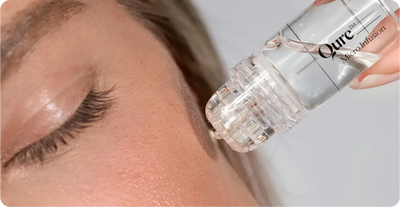
If you want to build a more complete skin-focused routine alongside LED sessions, our anti aging serum and micro infusion facial system can support a measured, science-forward approach to long-term skin quality.
Read more about targeted skincare:
- Do You Need Eye Protection For Red Light Therapy
- Red Light Therapy Before Or After Tanning
- Red Light Therapy Sunburn
- Does Red Light Therapy Affect Tattoos
- Red Light Therapy Female Hormones
Most Popular Posts
-
 #Skin
#Skin
What You Eat Can Reduce Premature Aging by...
-
#Skincare
Beauty Sleep Is Real!
-
#LED Light Therapy
Hack your skincare to match your menstrual cycle
-
#Skin
Ice Bath Facial: the affordably cool hack that...
-
#Skincare
5 Ways To Prevent Premature Ageing
-
#Skincare
Glow Up for the Holidays: Radiant Skin Tips...
-
#LED Light Therapy
Shining Light On Sun-Damaged Skin
-
#LED Light Therapy
How LED Therapy Can Transform Your Skin
-
#Skin
How Cortisol Affects the Skin: The Stress-Skin Connection...
-
#Skin
The Hidden Toll of Smoking on Your Skin:...


